Contact Us

TD Business Central Online Login: Secure Web Portal Access

Accessing TD Business Central online means connecting to a banking platform through your browser — and that browser session carries the same weight as walking into a bank branch with signing authority. This page explains how the web portal works, what happens between your browser and TD's servers during every session, and what you should configure on your devices before that first login.

This is not a rehash of the basic login steps. This page goes deeper into the online access architecture: TLS handshakes, session token management, concurrent login policies and the device trust framework that determines whether your machine gets past the front door.

Login Now Security Overview
Secure web browser displaying TD Business Central online login portal with TLS certificate verification and encrypted connection indicator

Online Access Essentials

Every TD Business Central online session runs over TLS 1.3 encryption. Your browser authenticates the server certificate before any data transmits. After credential entry and MFA verification, the platform issues a session token that expires after 15 minutes of inactivity. Concurrent sessions from multiple devices are blocked by default — one active session per user at a time. All traffic routes through Canadian data centres, and IP-based restrictions (when enabled by your administrator) add a geographic fence around who can access the portal.

Web Portal Architecture

Understanding how the TD Business Central online portal is built helps explain why it behaves the way it does — from the initial page load to the moment your session terminates.

The Connection Sequence

When you navigate to the TD Business Central login page, your browser initiates a TLS 1.3 handshake with TD's web servers. That handshake establishes an encrypted tunnel before a single byte of credential data leaves your machine. The server presents a certificate issued by a recognized Canadian certificate authority. Your browser verifies the certificate chain automatically — if anything looks wrong (expired cert, domain mismatch, untrusted issuer), the browser blocks the connection entirely.

Once the encrypted tunnel is established, the login page loads. No credentials are cached client-side. Password fields use secure input handling that prevents clipboard snooping and keystroke logging from basic malware. The MFA code exchange happens server-side, with the one-time token validated against TD's authentication service before the session begins.
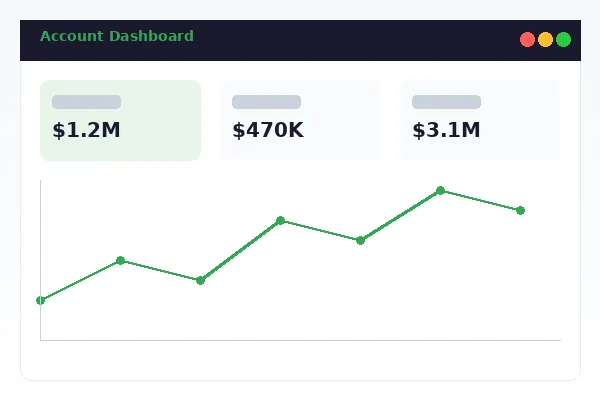
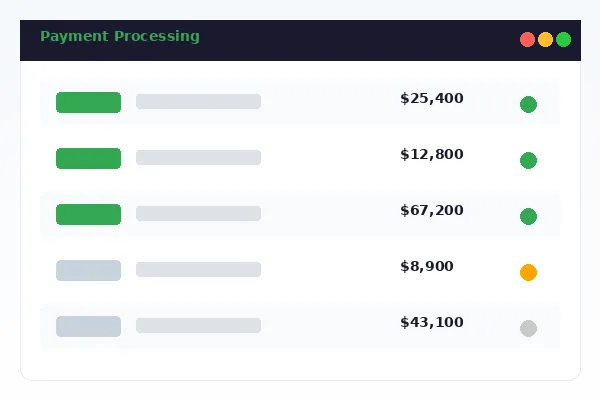
Diagram showing TLS 1.3 encrypted connection sequence between user browser and TD Business Central web servers with certificate verification steps
Server-side session management architecture showing token generation, validation and automatic timeout enforcement

Server-Side Rendering and Data Flow

TD Business Central does not expose raw financial data to your browser's JavaScript layer. Sensitive operations — payment execution, balance queries, report generation — are processed server-side. Your browser receives only the rendered output. This means even if a browser extension or malicious script is running on your machine, it cannot intercept raw account numbers, routing data or transaction details from the page DOM.

File downloads (CSV exports, BAI2 files, PDF reports) are generated server-side and delivered through an authenticated download link that expires after a single use. No financial data persists in your browser's local storage or session storage after you log out.

Session Security Protocols

A TD Business Central online session is not just a browser tab. It is a server-managed state with strict lifecycle rules designed to prevent unauthorized access even if your device is compromised mid-session.

Session Token Management

After successful authentication, the server issues an encrypted session token. This token is bound to your IP address, browser fingerprint and user agent string. If any of those change mid-session — for example, if your VPN switches servers — the session is immediately invalidated and you must re-authenticate. Tokens cannot be transferred between devices or browser profiles.

Automatic Session Timeout

Sessions expire after 15 minutes of inactivity. "Inactivity" means no mouse clicks, keyboard input or page navigation within the portal. Background tab focus does not count as activity. When a timeout occurs, the platform saves any draft payment templates but does not submit pending transactions. You are redirected to the login page with a timeout notification.

Concurrent Login Prevention

TD Business Central permits one active session per user ID at a time. If you log in from a second device, the first session is terminated immediately. This prevents scenarios where a compromised credential is used simultaneously from a different location. Your company administrator can view active sessions and force-terminate any session from the user management panel.

Sensitive Action Re-Authentication

Certain high-risk operations require step-up authentication even within an active session. Initiating a wire transfer above a threshold, modifying user permissions or changing registered MFA devices triggers an additional verification prompt. This protects against session hijacking scenarios where an attacker gains control of an already-authenticated session.

Device Management and Trust

TD Business Central tracks the devices you use to access the platform. Understanding how device trust works helps you avoid unexpected MFA prompts and access blocks.

Trusted Device Registration

The first time you log in from a new device, TD Business Central flags it as unrecognized and requires full MFA verification. After successful login, you have the option to register the device as "trusted." Trusted devices skip the MFA step for 30 days, after which re-verification is required. You can register up to five trusted devices per user account.

Your company administrator can disable trusted device registration entirely, forcing MFA on every login regardless of device. For organizations in regulated industries — legal, healthcare, financial services — this stricter posture is common and recommended.

Remote Device Revocation

Lost a laptop? Changed phones? You can revoke device trust from any active session or by calling TD Business Central customer service at 1-866-222-3456. Revoking a device immediately invalidates any session on that device and removes it from the trusted list. The next login attempt from that device requires full credential entry plus MFA verification.

Company administrators can view all trusted devices across all users and perform bulk revocations. After a security incident, revoking all trusted devices organization-wide takes one action from the admin panel — every user must re-authenticate on their next access attempt.

Recommended Browsers for TD Business Central Online

Browser choice affects both security and performance. Here is the compatibility breakdown with specific notes on the TD Business Central online login experience.

Browser Minimum Version TLS 1.3 Support Performance Rating Notes
Google Chrome 110+ Yes Excellent Best overall performance. Recommended for daily use.
Microsoft Edge 110+ Yes Excellent Chromium-based. Equivalent to Chrome in most scenarios.
Mozilla Firefox 115+ Yes Good Occasional rendering differences in report tables. Fully functional.
Apple Safari 16.4+ Yes Good macOS and iOS. Minor layout differences on older versions.
Internet Explorer All No Not supported Blocked at login. No TLS 1.3 support. Do not use.

Regardless of browser choice, disable extensions that interfere with JavaScript execution or modify page content during your banking session. Privacy-focused extensions like uBlock Origin are generally safe but should be whitelisted for businesscentral.co.com to prevent display issues.

Accessing TD Business Central from Shared or Public Computers

Sometimes you have no choice. A client meeting, a hotel business centre, a colleague's workstation. If you must access TD Business Central online from a device that is not yours, follow these precautions to protect your account.

Always Use Private Browsing

Open an incognito or private browsing window before navigating to the login page. Private browsing prevents the browser from saving your session cookies, history, form data or cached files after you close the window. It is not bulletproof, but it eliminates the most common data residue from shared-device sessions.

Never Save Credentials

When the browser prompts to save your password, decline. On shared computers, saved credentials are accessible to the next user. Do not check "Remember me" or "Trust this device" on any computer you do not personally own and control. After logging out, close all browser windows completely and verify the session has terminated.

TD Business Central Online Login FAQ

Yes. TD Business Central online login uses TLS 1.3 encryption for all data in transit, AES-256 encryption for data at rest, adaptive multi-factor authentication and real-time session monitoring. All web sessions are hosted on Canadian data centres under OSFI B-13 regulatory guidelines. Sessions automatically terminate after 15 minutes of inactivity, and concurrent logins from different devices are blocked by default. Read more about platform security measures.

You can access TD Business Central online from any computer with a supported browser and internet connection. However, if your company administrator has enabled IP-based access restrictions, login attempts from unregistered IP addresses will be blocked. For security, avoid logging in from public or shared computers. If you must use a shared device, always use private browsing mode and log out completely when finished.

TD Business Central online sessions expire after 15 minutes of inactivity. When a session times out, you are automatically logged out and redirected to the login page. Any unsaved work in progress — such as a partially completed payment — will not be submitted. Saved drafts and templates remain intact. Re-authenticate to resume your work. For session-related issues, visit the help centre.

Google Chrome 110+, Microsoft Edge 110+, Mozilla Firefox 115+ and Apple Safari 16.4+ are fully supported. Chrome and Edge deliver the most consistent experience based on platform testing. Internet Explorer is not supported and is blocked at the login page. Always use the latest browser version to ensure compatibility with TLS 1.3 encryption and the JavaScript features required by the TD Business Central platform.

Access Your Business Banking Portal Now

Your TD Business Central online session is protected by the same encryption and monitoring systems that guard institutional banking operations. Log in through the secure portal to manage payments, review accounts and run reports from any supported browser.

Login to TD Business Central Contact Support